
Fieldnote: A Grave at the Edge of the Road
I left Atlanta on a cloudy Saturday morning, just after 7 a.m., with the day still waking up. I had packed my car the night before, everything I needed for the drive set and ready. My travel companion, a teddy bear I named Beau Boudreaux (yes, he’s Creole like some of my ancestors), was strapped into the front passenger seat with a seatbelt on, ready to roll. I always laugh when I look over and see Beau sitting there like he has somewhere to be.
I was dressed in what I can only describe as my Southern girl uniform: cowboy boots, cutoff Wrangler shorts, and a cropped T-shirt, my braids freshly done just days before. It felt right for the road, familiar and easy, like I was stepping into a version of myself that had always been there.
Although I was leaving, I knew I would be back in Atlanta soon. This was a temporary detour, not a permanent move. A stretch of road I needed while I figured out what came next.
Leaving is never simple for me. I am deeply connected to my family, and stepping away from them, even for a time, carries weight. At the same time, I have learned to listen when something in me says it is time to move. That morning, both were true. I felt the pull to go, and I felt the weight of what I was leaving. I carried both with me as I pulled onto the highway.
Once I got on the road, something shifted. The further I moved away from the city, the more settled I felt. There is a rhythm to driving through the South that I have always loved, like the long stretches of highway, the trees lining the road, the quiet pockets of land that open up without warning. You pass homes set back from the road and barns that have clearly been standing for decades. I often find myself wondering who those homes belong to, what their lives look like, what they have seen, and, if I am being honest, who they voted for.
The South holds some of the most beautiful landscapes in the country. I may be biased because it is my home, but the beauty of this region takes my breath away every time. My route to Louisiana would take me through Mississippi, and I was particularly looking forward to stopping in Jackson to visit the Mississippi Civil Rights Museum, along with a few other historic sites.
I know people carry strong opinions about Mississippi because of its tragic past. Those feelings make some people hesitant to visit the state and some refuse to step foot there at all. That has never been my experience. I have never felt uncomfortable there, whether passing through or staying for a while.
That said, Mississippi does feel different at night. There are moments when the air itself feels heavier, like the past is closer to the surface. It reminds me of the Ghosts of Mississippi, a film centered on the assassination of Medgar Evers, a Mississippi native and the NAACP’s first field secretary in the state, who was murdered by white supremacist Byron De La Beckwith. That movie title has always stayed with me. There are times, especially at night, when it feels like the ghosts of those whose lives were taken unjustly are still present. Most of those deaths went unpunished. There was no justice. That kind of history does not disappear. It lingers. I do not feel threatened by it, but I can feel it.
I travel alone most of the time, which my father has never been comfortable with. He is a Black man born in 1948, and his concerns come from a place I understand, even when I do not move the way he would prefer me to. He tells me I am too friendly, and I think about that often, especially when I find myself in conversation with someone he would not want me speaking to at all.
And the people, especially the ones you might expect the least, have often been some of the most memorable. Not in the way people might assume, and not in a way that ignores history or pretends it does not exist. Many come from families and communities directly connected to a past that is violent and deeply dehumanizing. I do not take that lightly. At the same time, I have found that people are often drawn into conversation with me, and when I choose to engage, those conversations can shift something. Not always, and not perfectly, but enough to matter.
I have stood talking with men in worn Dickies overalls, their skin reddened from long days in the sun, in places where historically I would not have been safe at all. Those moments are complex. They are not about comfort or approval. They are about presence, awareness, and, sometimes, the possibility of something small changing in real time.
By the time I was approaching the city of Meridian, Mississippi, roughly 20 miles from the Alabama border and 93 miles from Jackson, I was not planning to stop at all. I was trying to make it to Jackson with enough daylight left to visit the museum and then find a hotel for the night. The trip was loosely planned, which is how I usually travel. I give myself room to explore and don’t book hotels ahead of time, figuring it out as I go. That’s how I was moving on this trip too, in real time, trusting I would land where I needed to (please don’t tell my dad, ha!).
As the signs for Meridian started appearing, something in me paused. I knew the city held weight in the history of the civil rights movement, but I could not immediately place why. So, as I was driving, I did what I often do when I pass through a city or town I have heard of but cannot fully place: I pulled out my phone and looked it up. Even as someone who studies civil rights history, I had to remind myself what Meridian was known for.
What came up was a fuller picture than I expected.
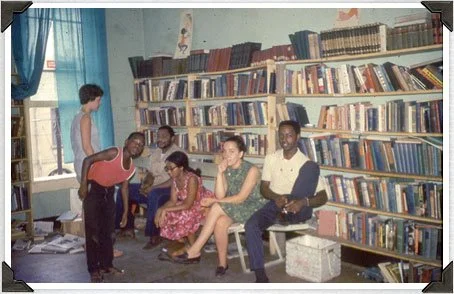
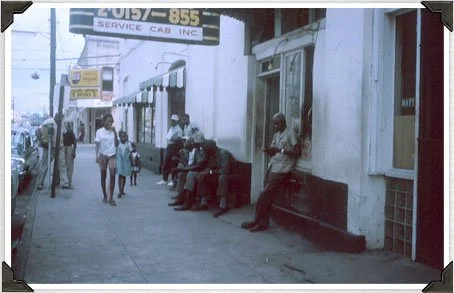
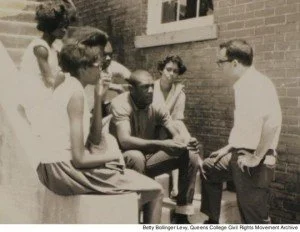
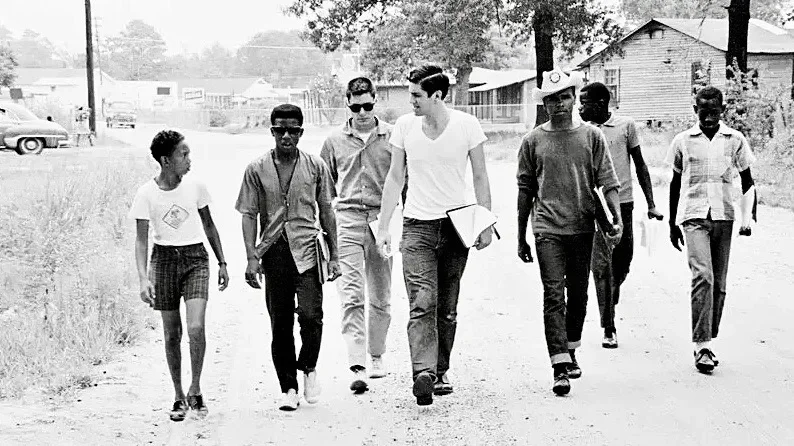
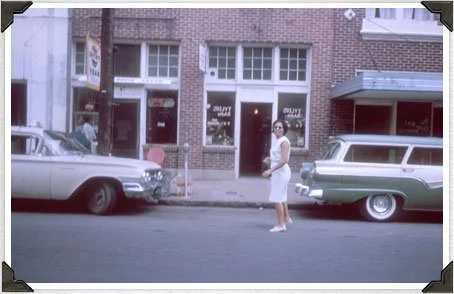
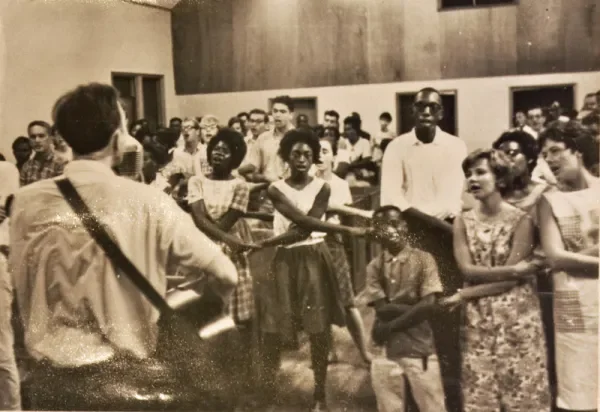
Meridian was a major hub during Freedom Summer in 1964. Freedom Summer was a coordinated campaign led by organizations like the Student Nonviolent Coordinating Committee (SNCC) and the Congress of Racial Equality (CORE) to register Black voters across Mississippi. At the time, only 6.7% of eligible Black residents were registered to vote, a figure documented by civil rights organizations, reflecting the impact of systemic barriers, intimidation, and violence.
The Freedom Summer campaign brought in hundreds of volunteers from across the country, many of them young, white college students. This was not incidental. It was strategic.
Black organizers, particularly within SNCC, understood that violence against Black Mississippians had long gone ignored. But the presence of white students would force national attention in ways the suffering of Black communities alone had not.
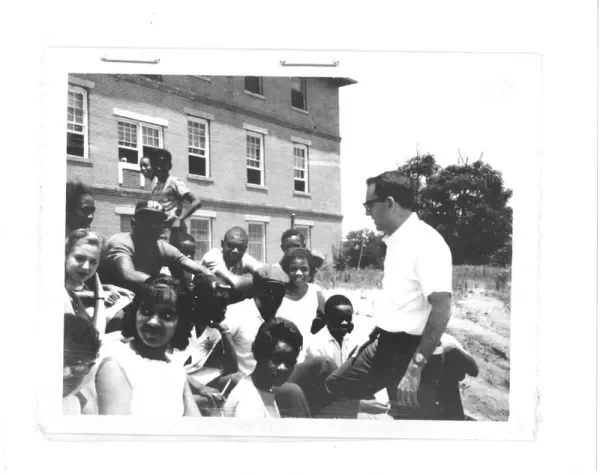
Volunteers worked alongside local organizers to register voters, support community efforts, and establish Freedom Schools, which was one of the campaign’s key components. These schools created space not only for academic learning, but for political education, critical thinking, and the cultivation of leadership among Black youth.
Groups like CORE and later the Meridian Action Committee, pushed for economic justice through boycotts, negotiations, and direct action.
It was a place where young people gathered, not as observers, but as active participants in their own liberation.
I sat with what I was reading, taking in both the scale and the courage of it.
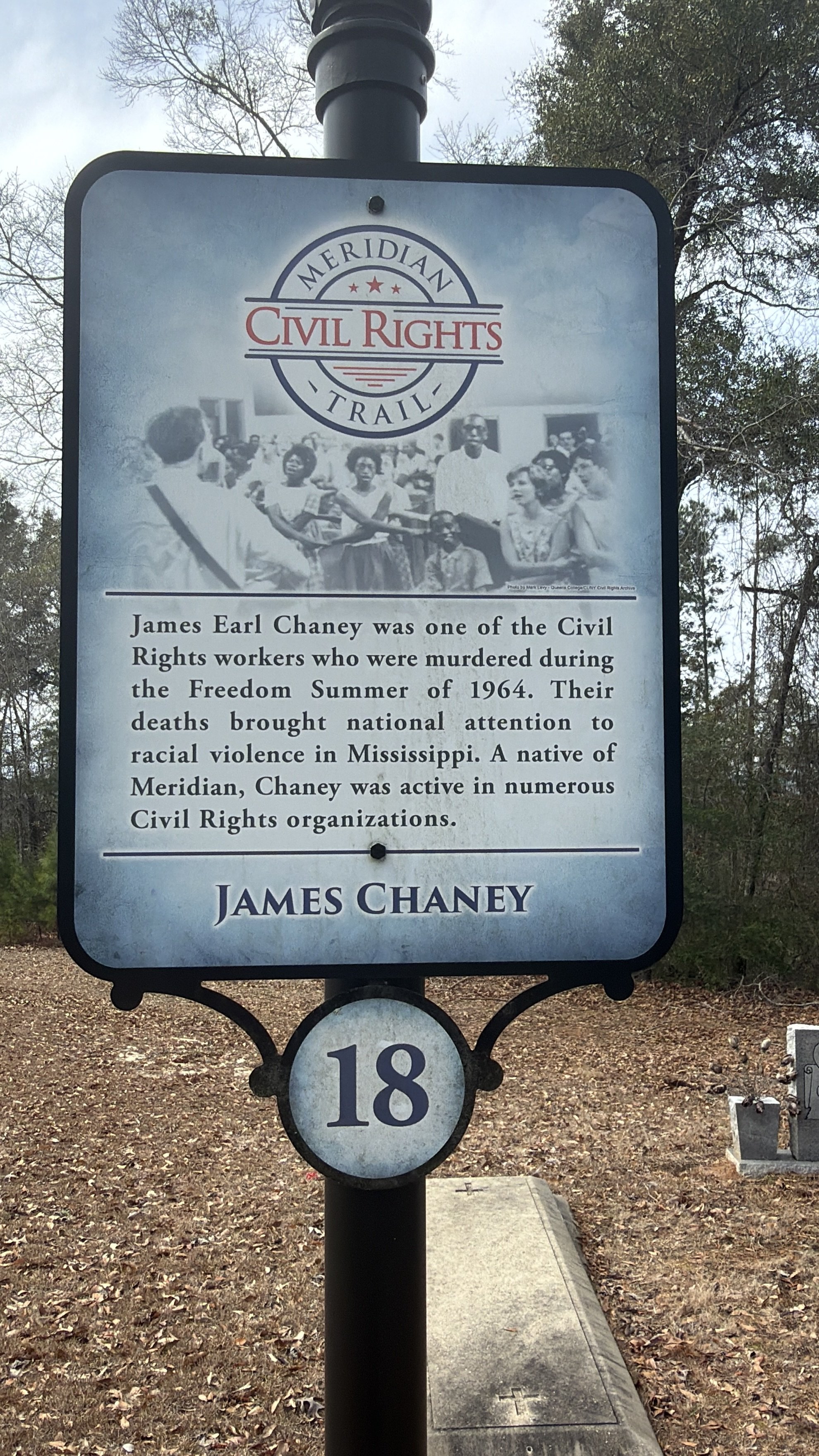
And then I saw his name. A name I had seen so many times in my civil rights history studies, James Chaney, civil rights martyr. Born in Meridian. Raised in Meridian. Buried in Meridian.
James Chaney was an integral part of Freedom Summer organizing in Meridian and nearby towns, including Philadelphia in Neshoba County, one of the most dangerous areas for civil rights workers in the 1960s and a known stronghold of the Ku Klux Klan.
To say the Klan was not pleased with civil rights activity in the area is an understatement. They, along with many white residents, resented the presence of young white students from the North, whom they dismissed as “agitators,” coming South and challenging the racial order they sought to preserve.
In defense of the “old South,” the Klan responded to Freedom Summer with its own campaign of organized violence and intimidation against anyone who dared to participate. Black residents were subjected to constant terror, beatings, kidnappings, church bombings, and other acts meant to suppress voter registration and desegregation efforts.
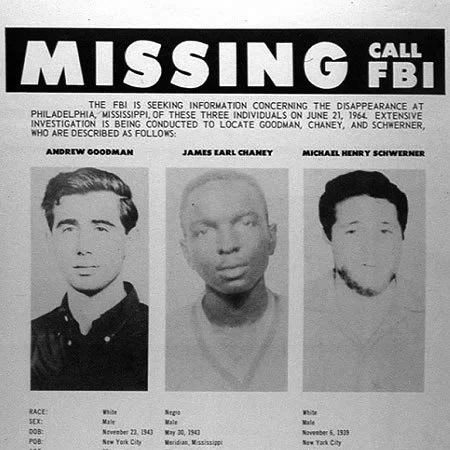
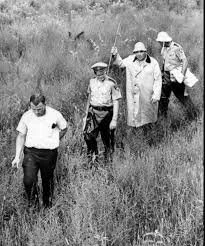
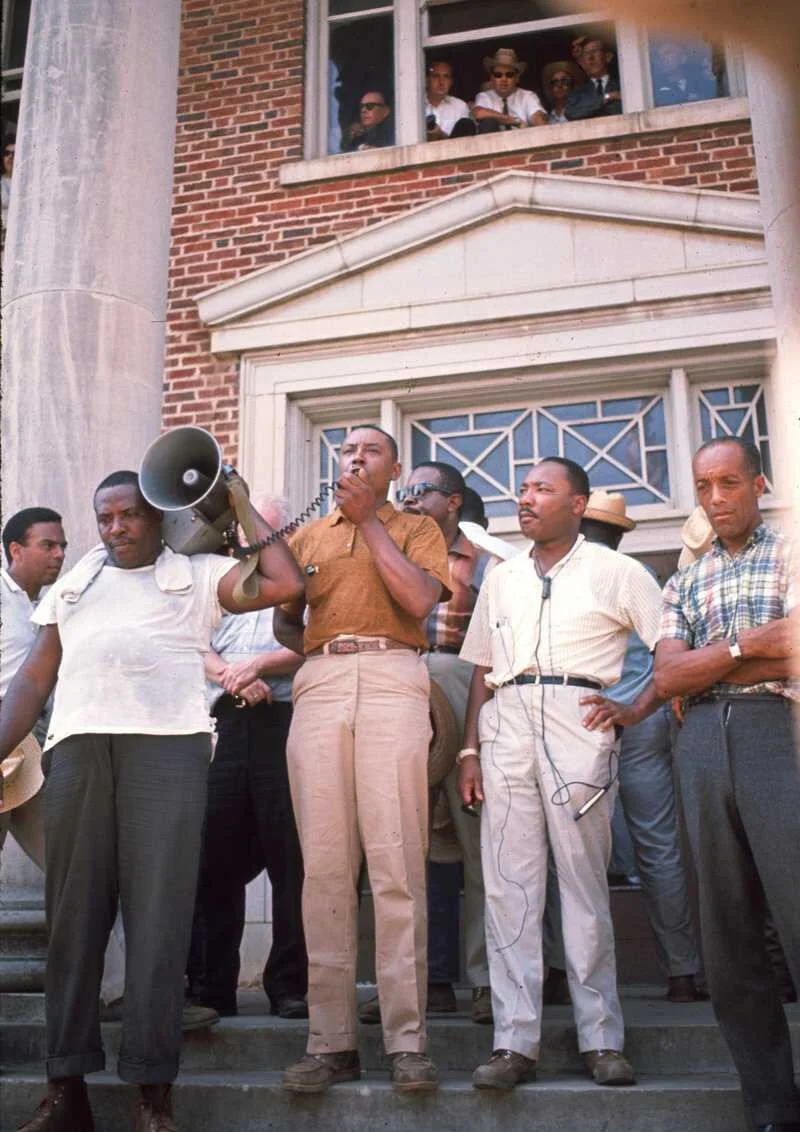
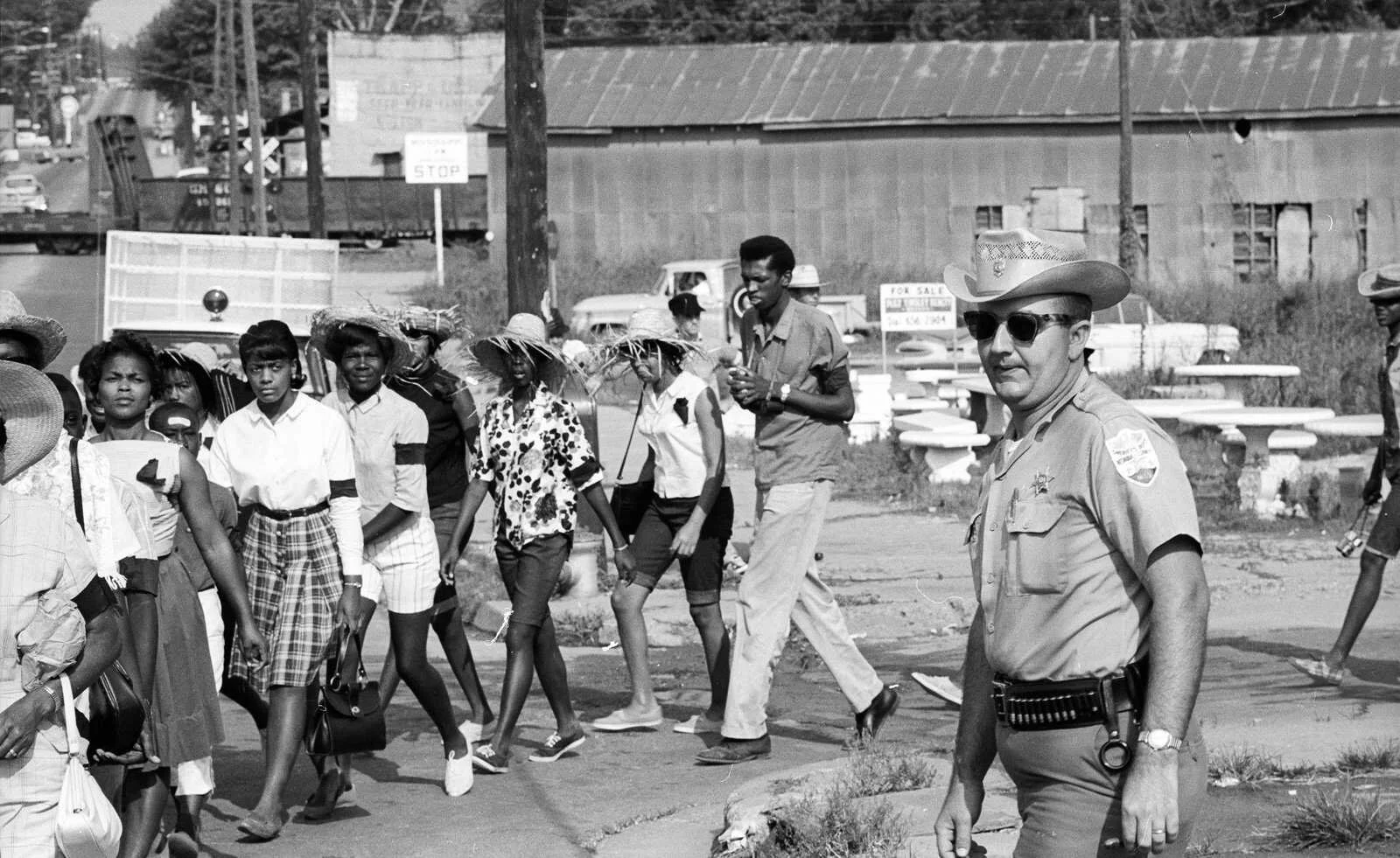
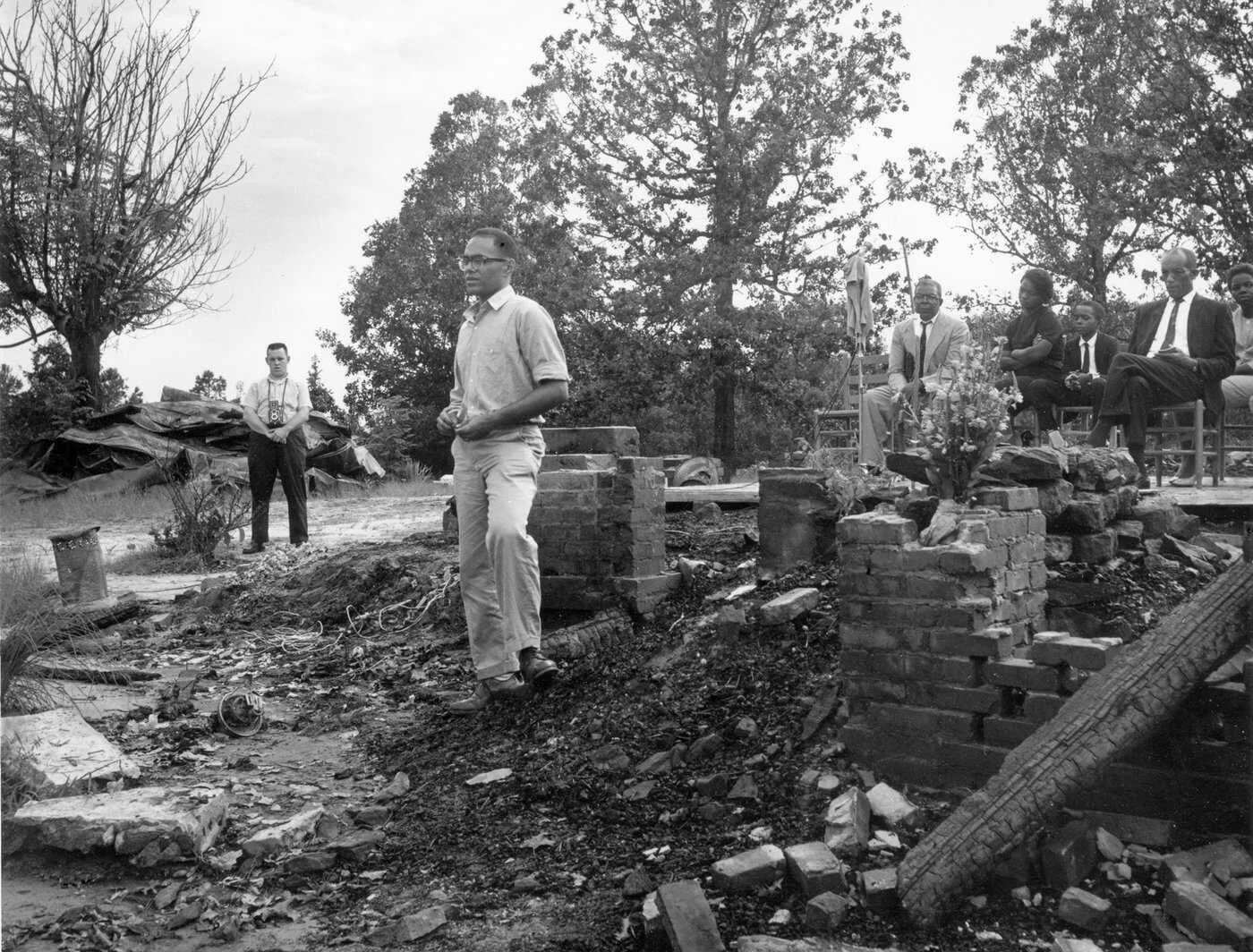
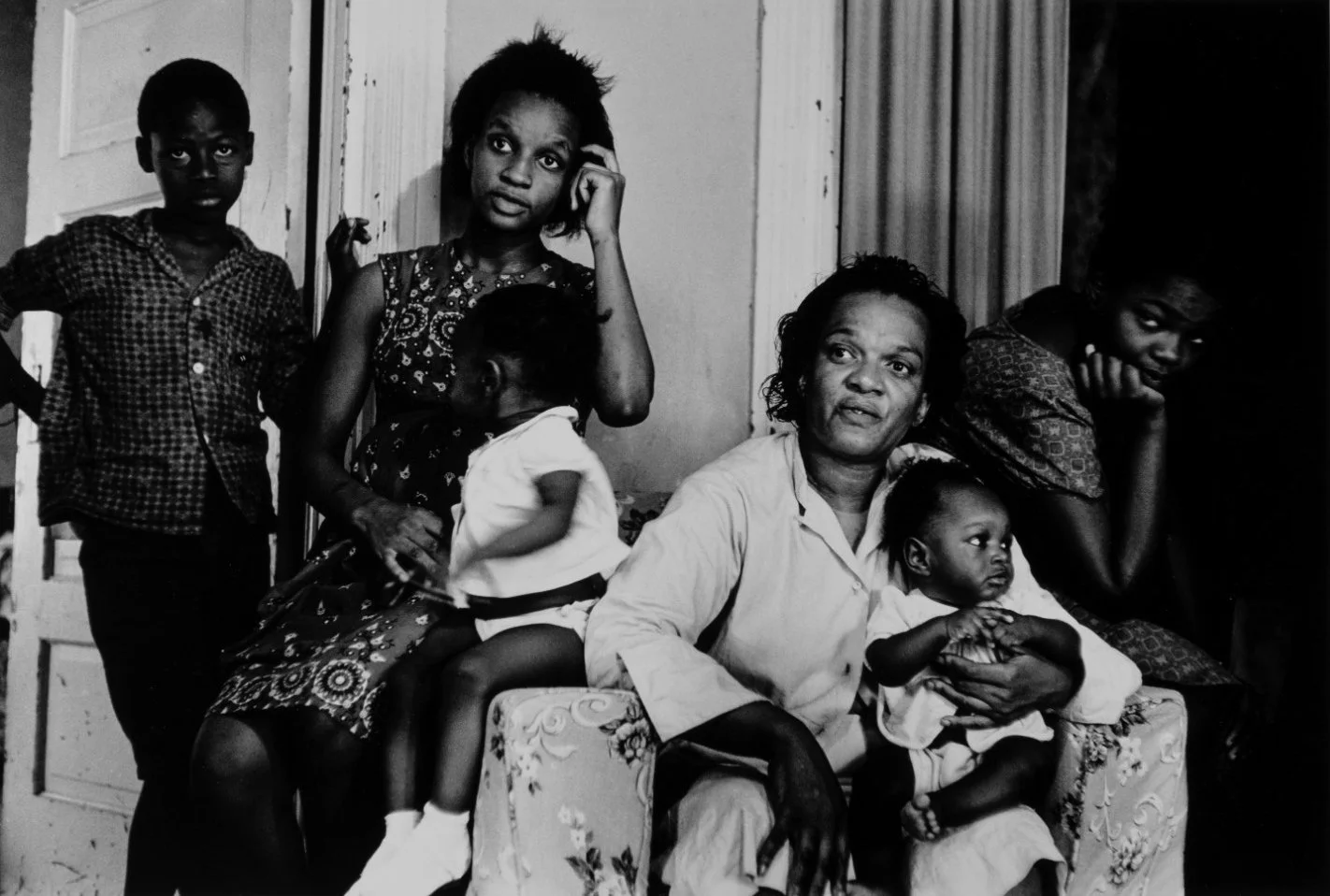
By 1964, however, Black communities in Lauderdale County, where Meridian is located, and in Neshoba County, were becoming more resolute. Alongside Freedom Schools, residents worked with volunteers to register voters, while also providing housing, food, and protection to those who came to support the movement.
It was within these mounting efforts that on June 21, 1964, Chaney, alongside Michael Schwerner (one of the lead organizers for CORE), and Andrew Goodman, both young, passionate Jewish students from New York, traveled to investigate the burning of a Black church in the rural community of Longdale, near Philadelphia.
While passing through Philadelphia on their way back to Meridian, the three men were stopped by Neshoba County Deputy Sheriff Cecil Price. A member of the Ku Klux Klan, Price had been monitoring the activities of civil rights workers in the area.
He arrested the three young men on traffic charges and held them in the county jail for several hours.
Schwerner, appreciating the risks of traveling in the area, told colleagues in Meridian that if he, Chaney, and Goodman were not back by 4:00 p.m., to come looking for them. After the 4:00 deadline passed, COFO workers in Meridian reached out to authorities in the area but were told they had not seen the missing activists.
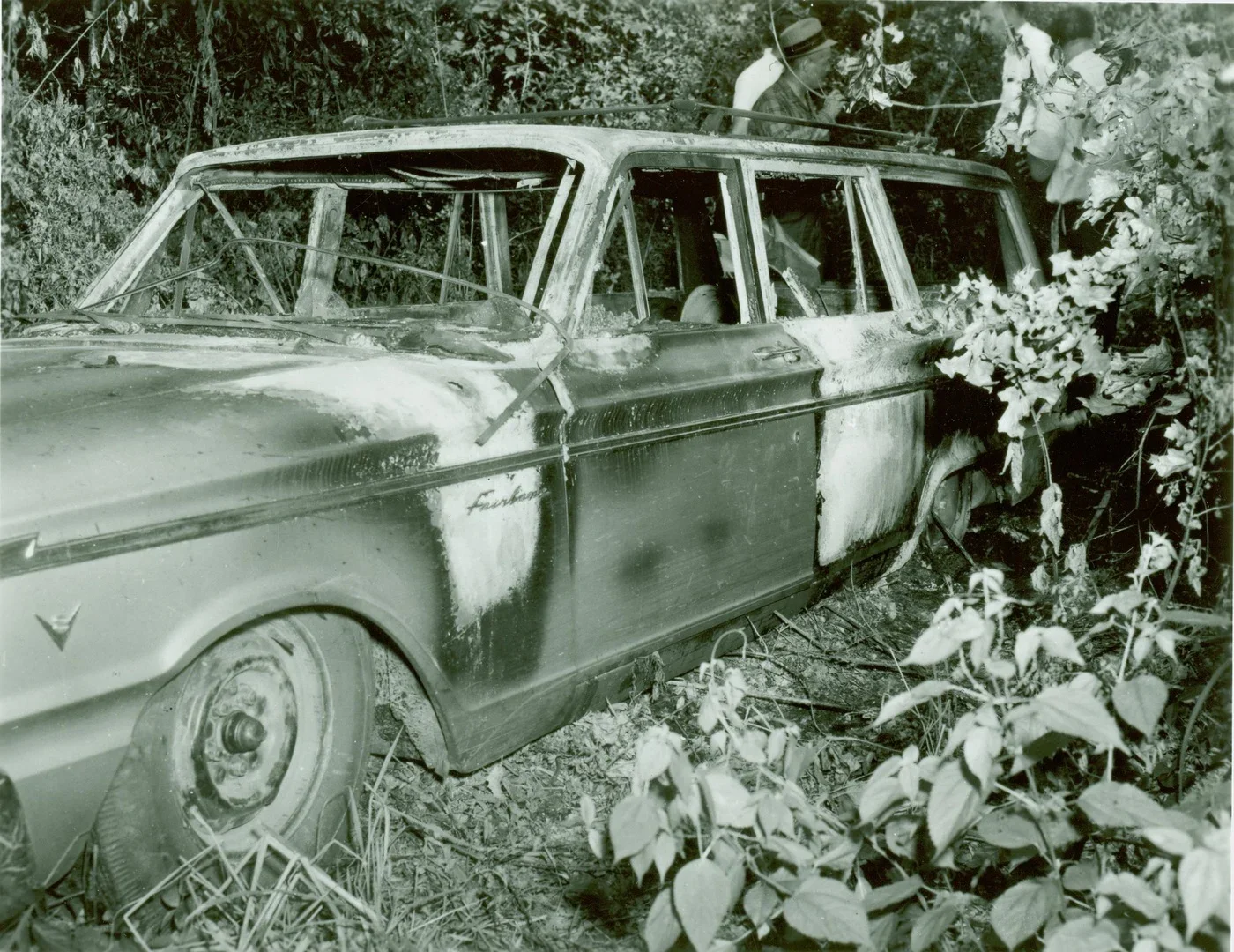
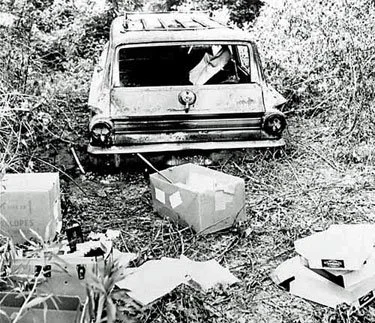
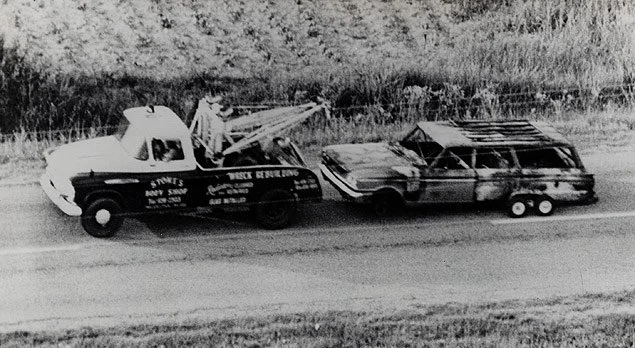
No one knew that the three men were released that night around 10:00 p.m. and escorted out of town by Price, who soon re-arrested them and handed them over to Klansmen who then took the trio to a secluded intersection near Philadelphia where they were murdered.
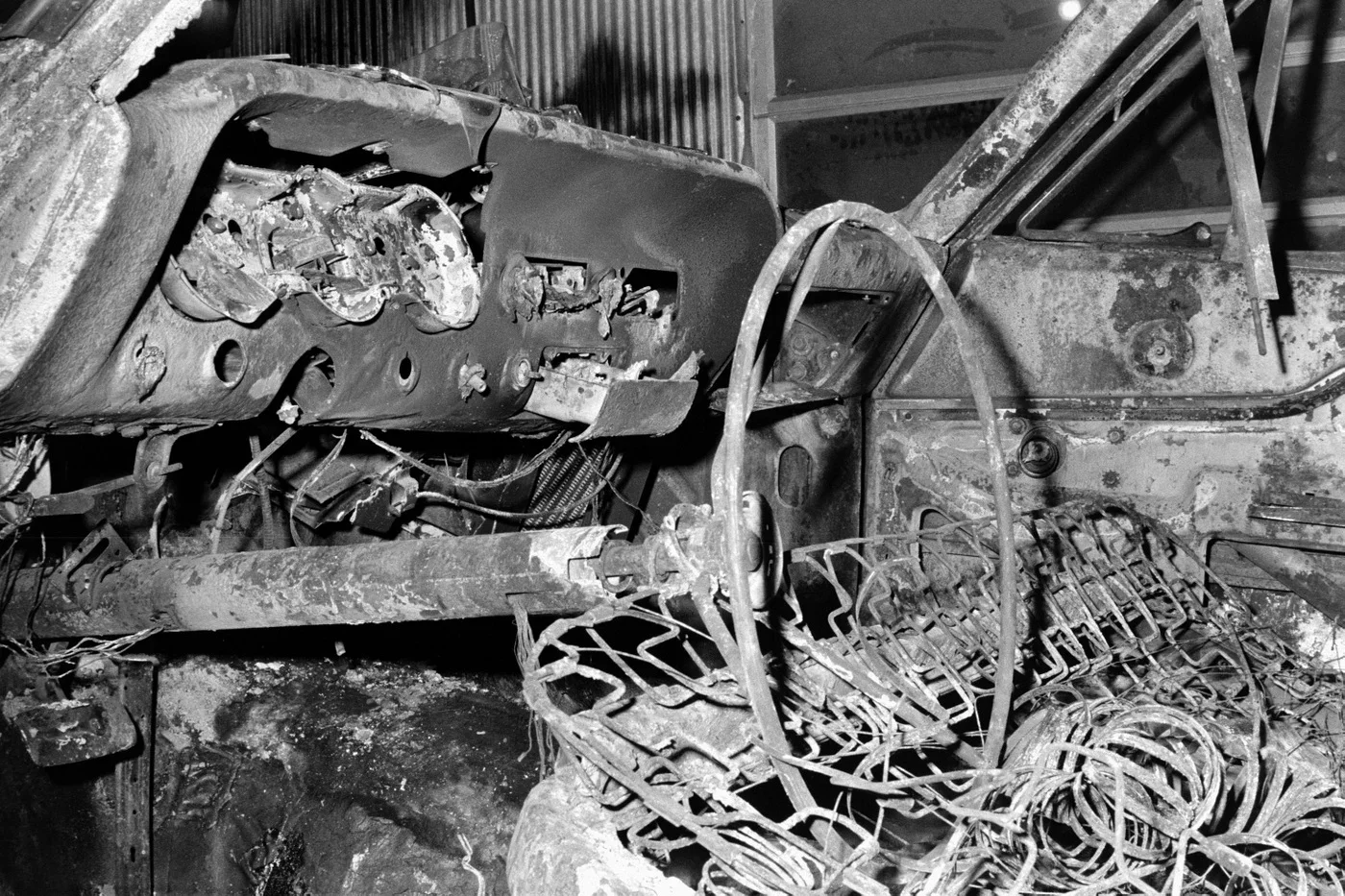
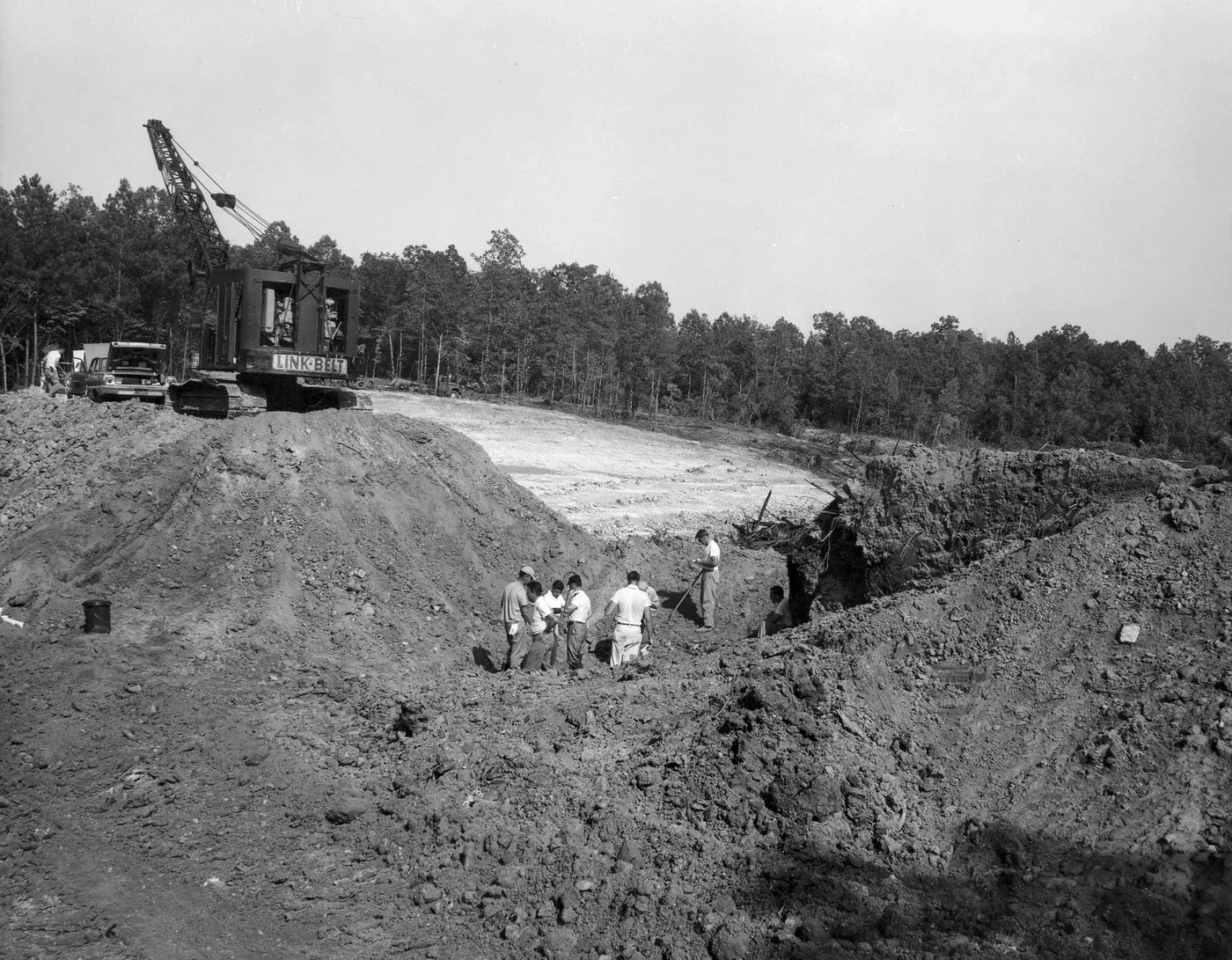
The details of the murders are heartbreaking. Schwerner and Goodman were both shot in the heart. It was reported that the Klansman who killed Schwerner pointed a gun at his chest and asked, “Are you that n-lover?” When Schwerner calmly replied, “Sir, I know just how you feel,” he was immediately shot in the heart. Goodman was then pulled out of the car and immediately shot in the heart. An autopsy later revealed that Goodman had fragments of red clay in his lungs and in his fists, suggesting he may have been buried alive alongside Chaney and Schwerner. Chaney was brutally beaten, chain-whipped, and castrated before being shot three times. The civil rights workers, now martyrs, were buried in an earthen dam, where they remained for 44 days before they were discovered.
Sitting with all of this history and remembrance, I had an urge to go visit James Chaney ’s grave. I quickly found the address and entered it into my GPS. As soon as I hit “directions” I saw that I was just less than a minute away from passing the exit to the cemetery. I steered my car off the exit and looked at my map for the next turn.
I slowed down as I followed the directions, coming off the interstate and onto a stretch of road lined with small businesses. After about half a mile, the GPS told me to turn left. I made the turn onto a longer road that opened up into one of those quiet country stretches you see all over the South.
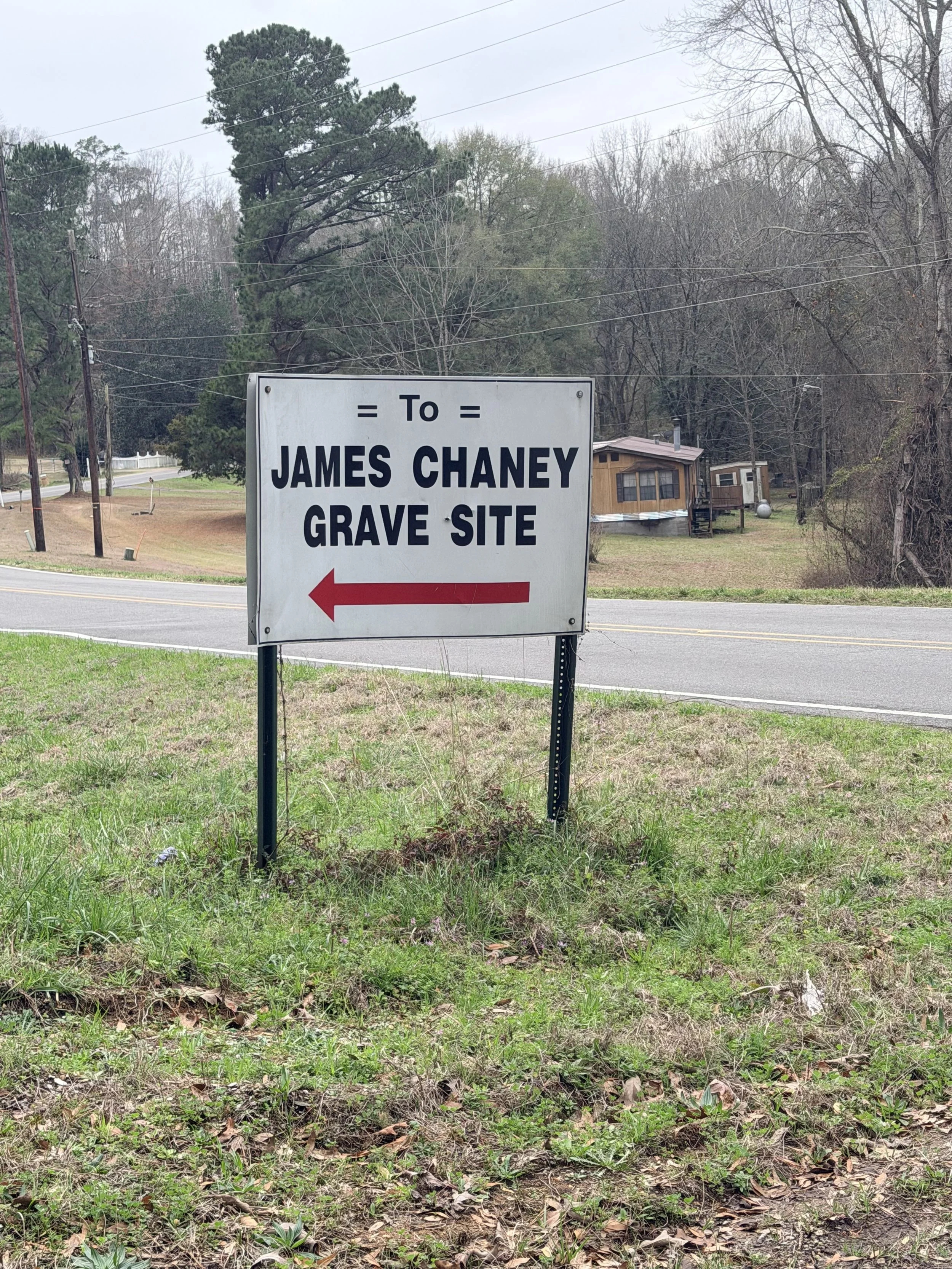
A few miles later, I came up on a plain metal sign pointing toward the burial ground. It read “James Chaney Grave Site,” with an arrow directing the way. Nothing dressed up about it. Just a sign doing its job.
I’ve seen those kinds of signs my whole life growing up in the South, especially near small Baptist churches.
Simple, metal, sometimes streaked with rust from years of rain and the letters worn from the sun. Seeing signs like those makes me think of the sign near my mother’s family church in rural Arkansas. My mother’s church sign read, “Mount Pleasant Baptist Church and Burial Ground this way.”
I brought my focus back to the road and made a turn and drove up a hill. As I came around the bend, a church came into view ahead of me. It wasn’t large or ornate. Just a small country church sitting back from the road.
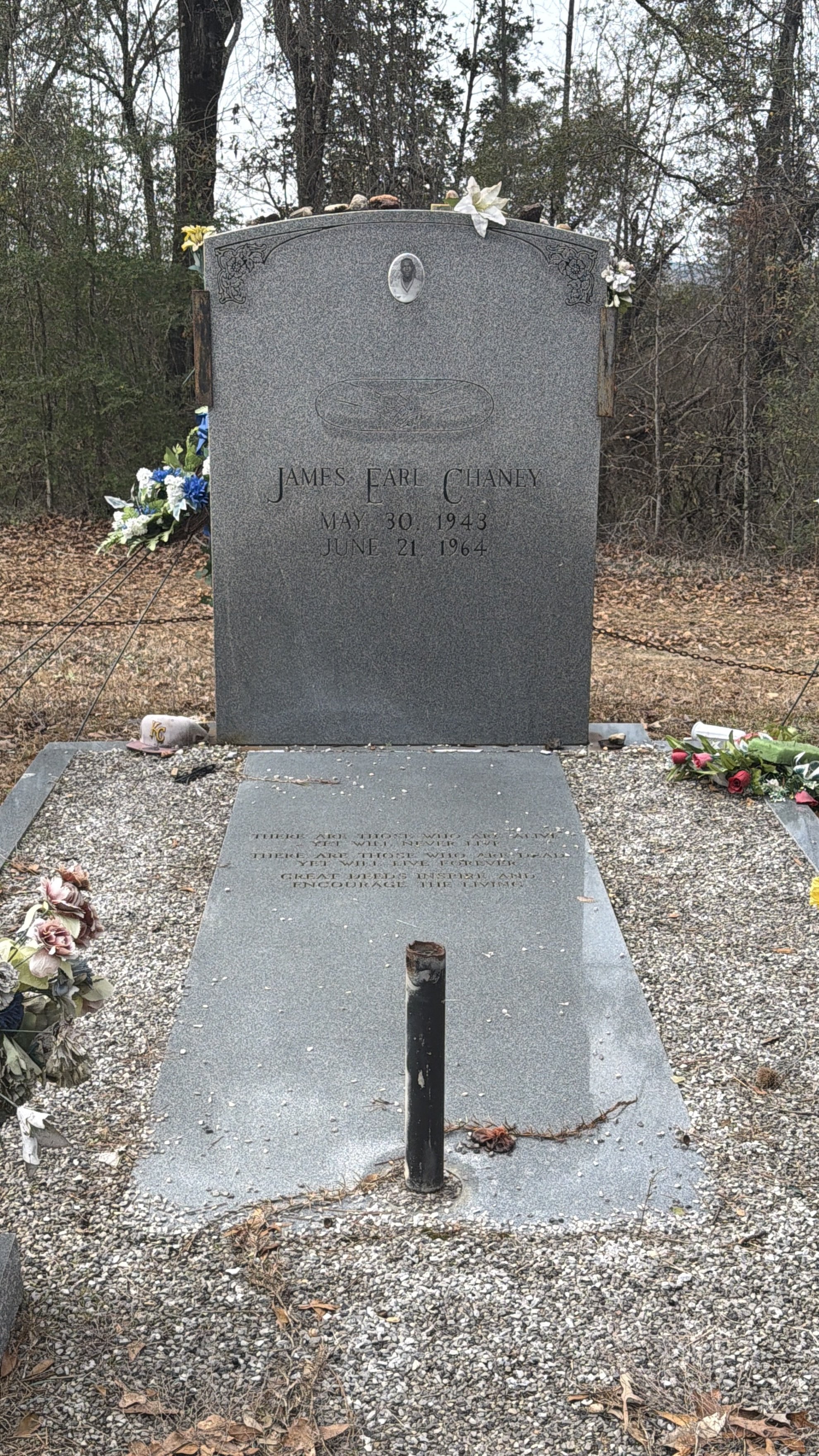
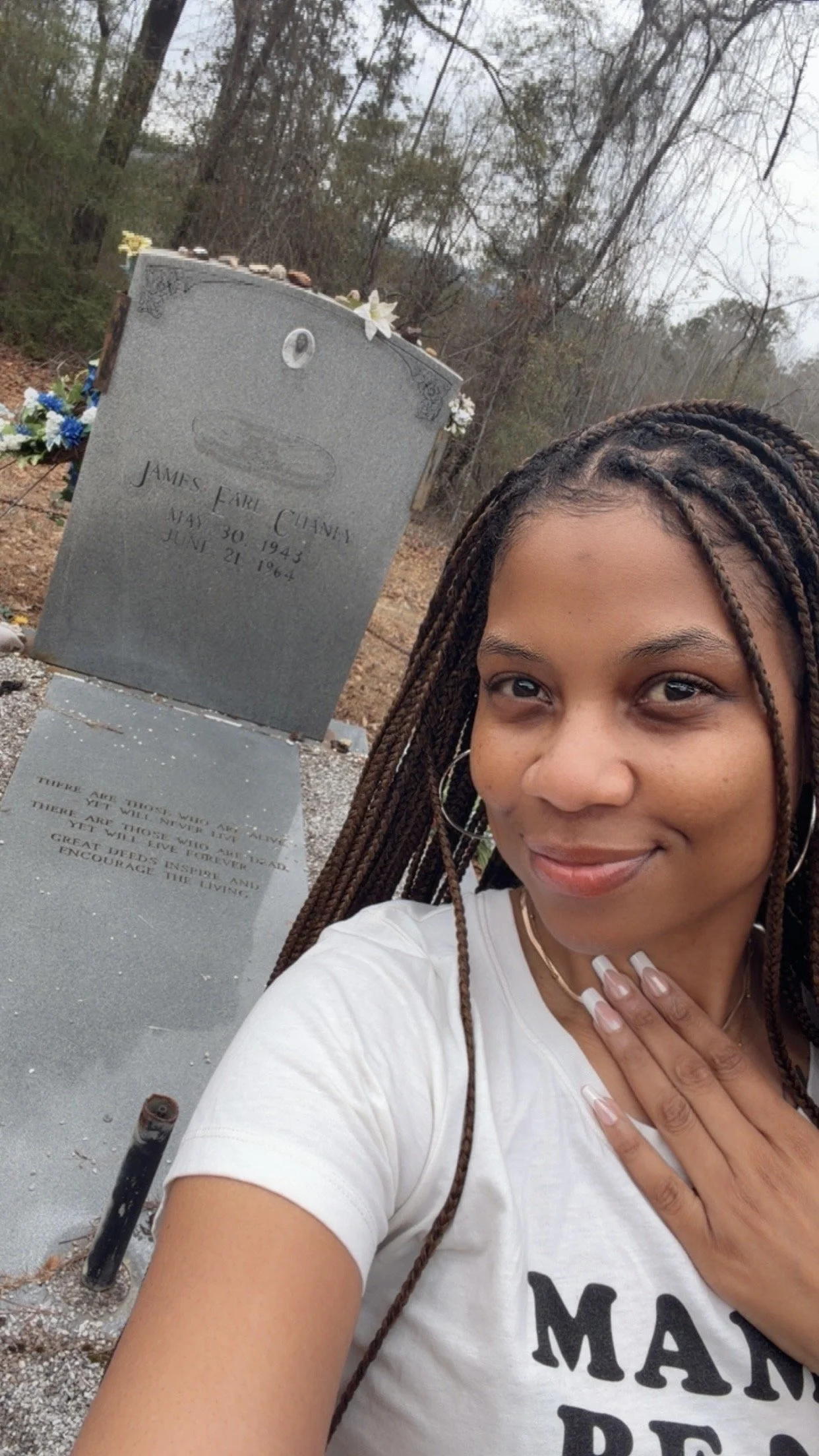
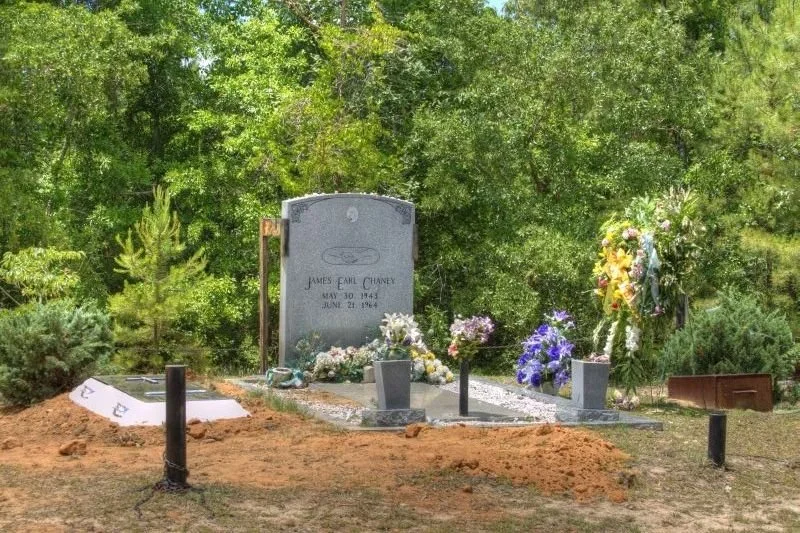
As I kept driving in the direction of the church, something pulled my attention to the right. I glanced out of my passenger side window and saw his name, James Earl Chaney, clear and visible on a tall, upright headstone.
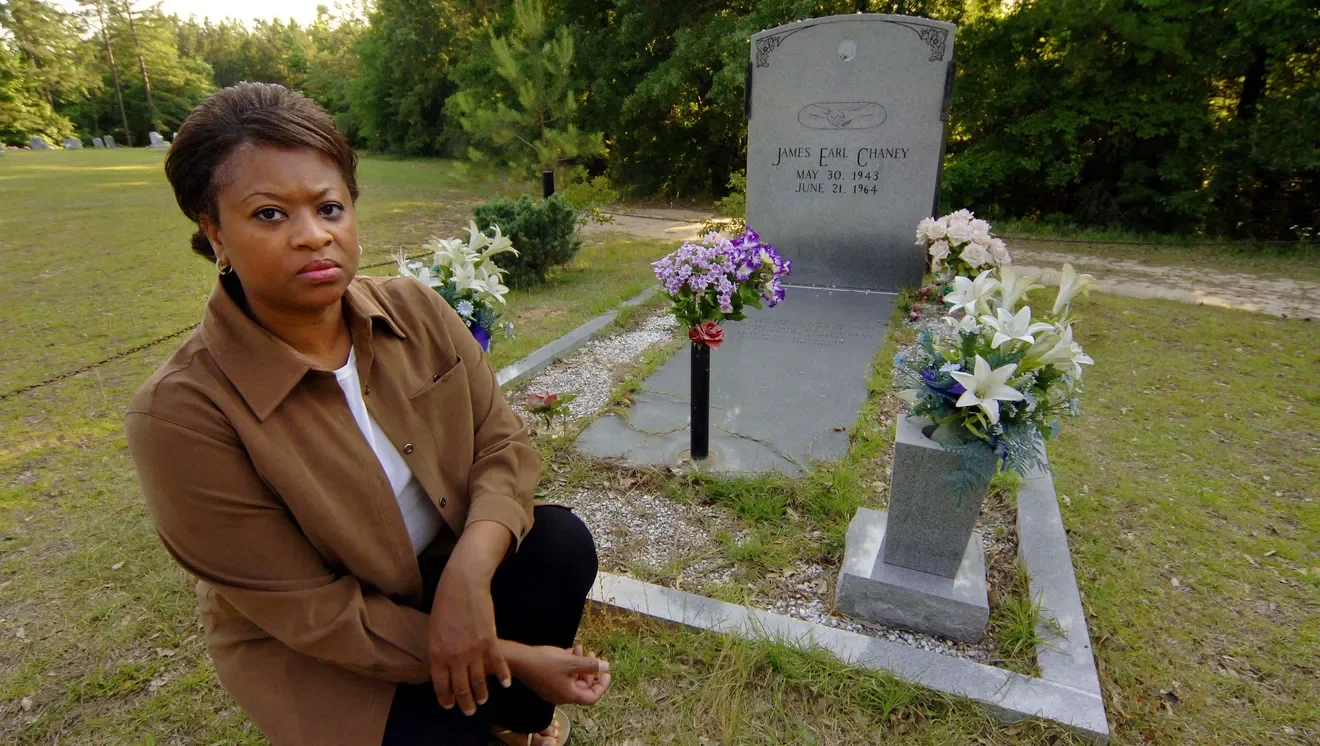
What struck me immediately was how close to the road Chaney was buried. His final resting place sat right at the edge, while the rest of the cemetery stretched back toward a line of trees.
I eased forward just a few feet and drove into the cemetery driveway to the right, parking along the edge of the dirt drive. I sat there for a moment after I parked, hands resting on the steering wheel, taking a few deep breaths before moving. I’m not going to lie. I did feel a little nervous. Cemeteries will do that, especially when you’re alone. This nervousness wasn’t unfamiliar. I had felt it before.
In Savannah, I once visited a historic Black cemetery and remember standing at the entrance, staring at the tall weeping willows, trying to talk myself into walking in. Weeping willows hang low, their branches reaching down in long, uneven strands, and for a moment it can feel like something just beneath them could pull you in. I know. Crazy right? However, once I walked into the Laurel Grove South Cemetery in Savannah, that feeling shifted and the old cemetery felt quiet in a way that calmed me.
The same thing happened in Columbus, Georgia, when I went looking for a distant cousin’s grave. Alfonso Biggs was a well-known local historian whose work is still remembered in the community. When I arrived at the Porterdale Cemetery, I felt that same hesitation walking in, but once I did, it eased.
Those experiences stayed with me, but this felt different. There is something a bit destabilizing about pulling up alone on a quiet road in the backwoods of Mississippi that will make you second-guess a rushed decision to explore.
After another moment, I stepped out of the car, closed the door softly behind me, and turned on the video camera on my phone. I wanted to capture everything.
It was so quiet that the sound of my boots on the gravel felt louder than it should have, as if I were in some way disrespecting the dead. I started walking toward the road, toward the headstone. It wasn’t far, maybe fifteen or twenty feet, but I slowed down as I got closer.
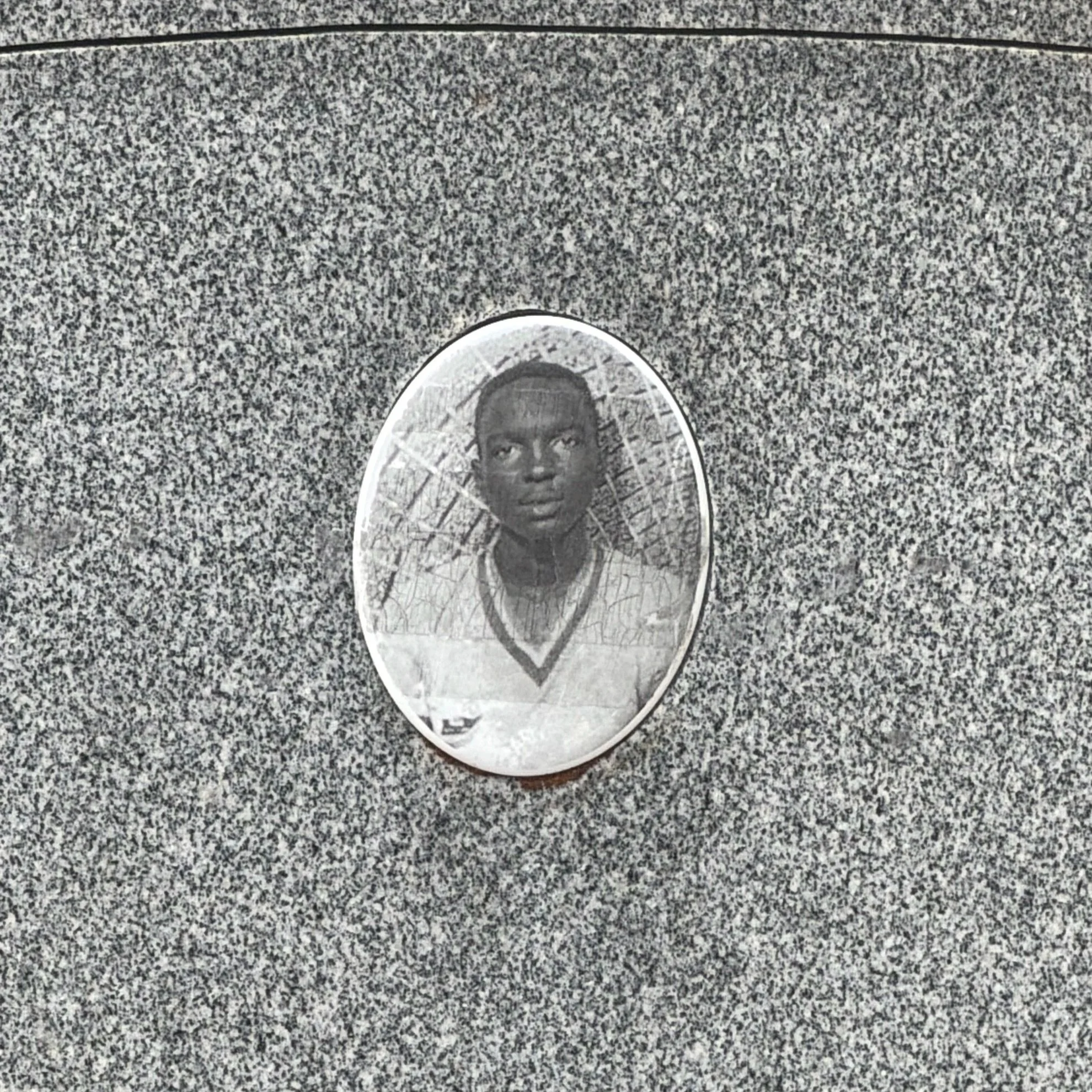
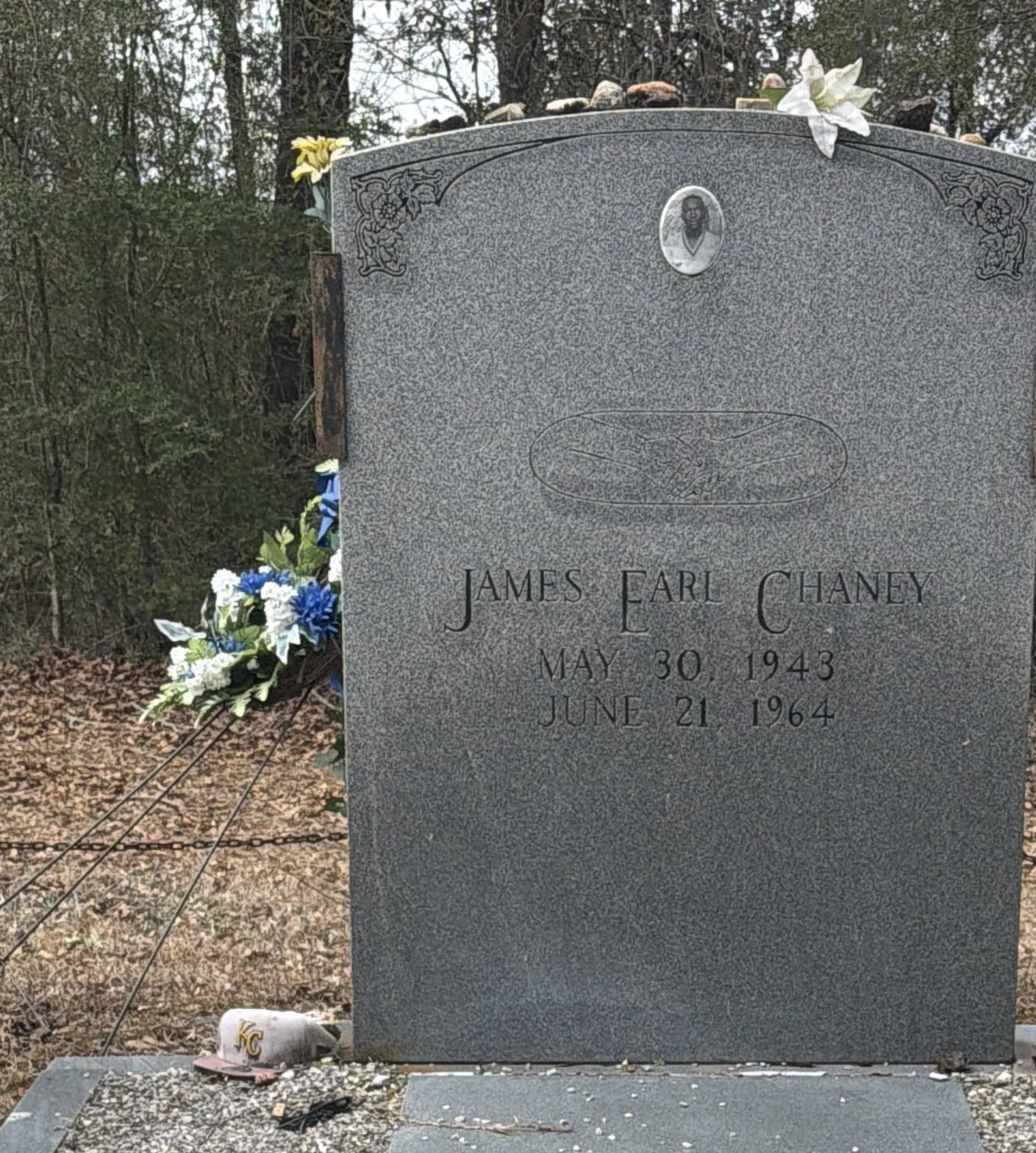
Once at the headstone, the first thing I noticed was Chaney’s photo. It was the same image I had seen so many times before, the one used on FBI flyers during the search for him, Goodman, and Schwerner more than 60 years ago. I had looked at that picture countless times. Standing there in front of it, it felt different.
It struck me all over again how young he looked. His face carried a softness that made his age undeniable, but there was something else there too, something heavier. It reminded me of the expressions you often see in photographs from that time, a kind of quiet weight that people carried while living through something constant and oppressive.
That is when the emotions hit me.
I started crying, and it wasn’t quiet. I was sobbing. Through the grief and tears, I heard myself say, “I’m sorry. I’m so sorry. I’m so sorry this happened to you.” I said his name out loud. I talked to him. I told him about myself. I stood there longer than I expected to, trying to hold the moment without rushing through it.
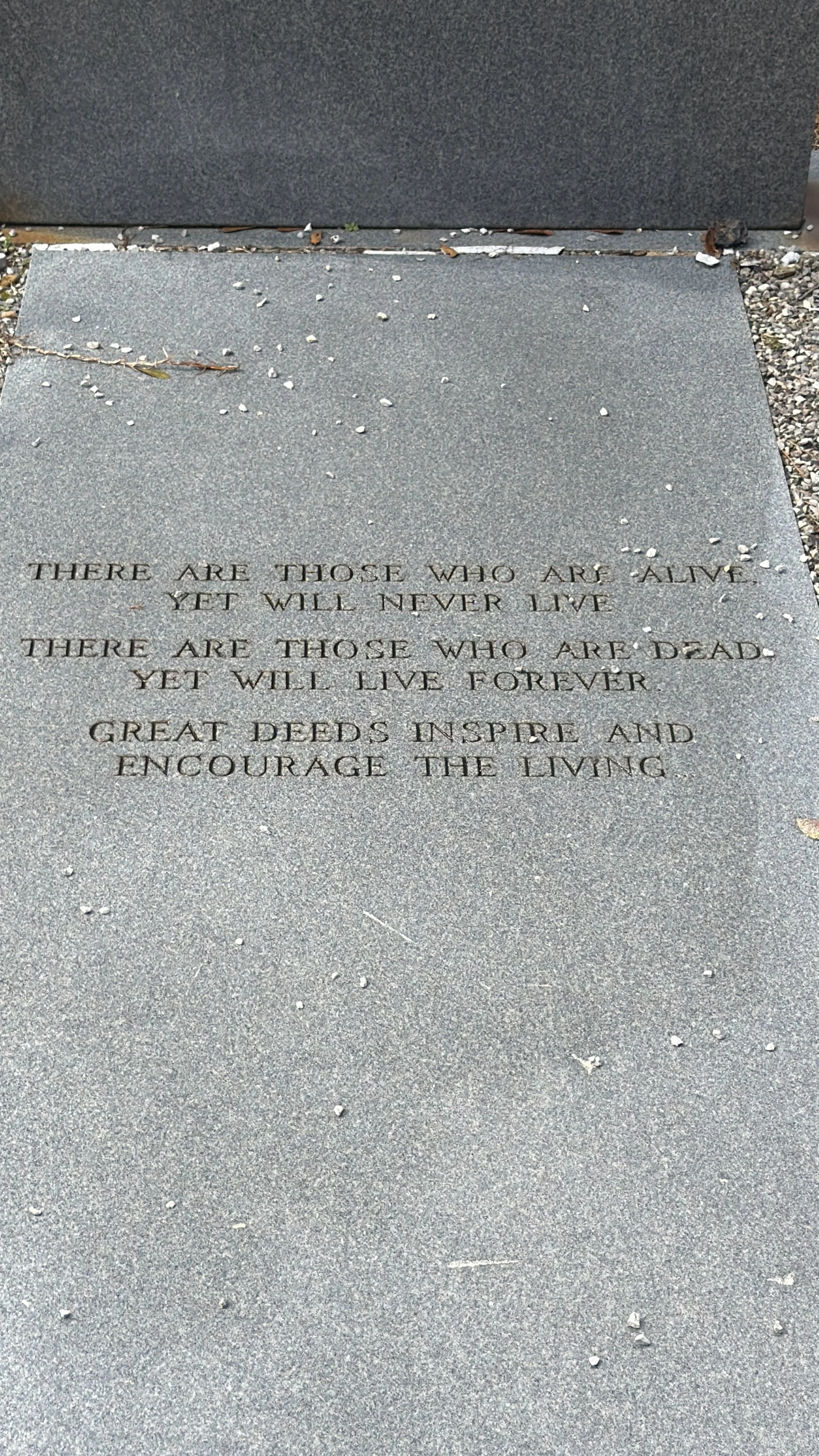
After several minutes, I gathered myself enough to really look at the headstone. It stood upright, taller than most, his name etched clearly: James Earl Chaney, with the dates beneath it marking the span of his life, May 30, 1943, to June 21, 1964. Below it, set into the ground, was a concrete slab with an inscription carved into it.
It read: “There are those who are alive yet will never live. There are those who are dead yet will live forever. Great deeds inspire and encourage the living.” I read it slowly, taking in each line, and that last sentence stayed with me. It made me think about not only who he was and what happened to him, but what he had already done in his short 20 years on this earth. It put everything into perspective for me.
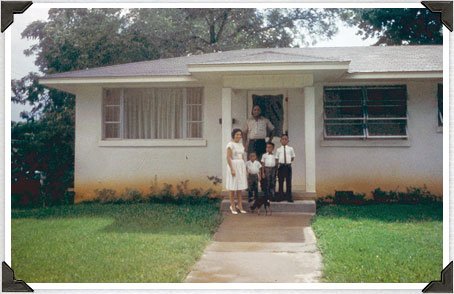
James Earl Chaney was the eldest son of Ben Chaney Sr. and Fannie Lee Chaney. He had a younger brother, Ben, who looked up to him deeply, and three sisters, Barbara, Janice, and Julia.
As a teenager, he and some of his classmates wore paper badges that read NAACP to show their support. For that, they were suspended from their segregated school because the principal feared how the white school board would respond.
After high school, he started working as a plasterer's apprentice in a trade union, building a life for himself, the way any young man would. But the activism of his youth kept calling him.
By 1962, Chaney was already participating in Freedom Rides, first from Tennessee to Greenville, Mississippi, and then from Greenville to Meridian. Not long after that, he began volunteering and joined CORE, where he helped organize voter education classes, connected organizers to local church leaders, and helped them move through counties safely. He was a bridge between people, someone who knew the community and understood what was at risk.
In 1964, not long before he was murdered, Chaney met with leaders at Mount Nebo Baptist Church to bring Michael Schwerner to speak with the congregation about voter education and registration.
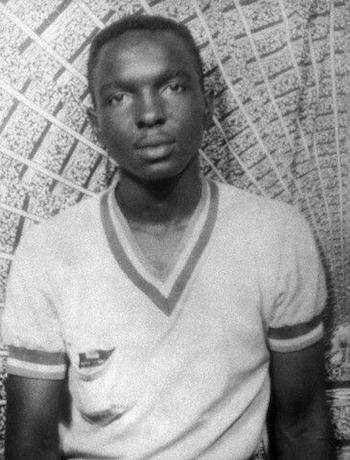
JE
A 1964 portrait of James Earl Chaney, known to friends as “JE.” For many, this is the image we’ve come to know. above: close up of the words etched into Chaney’s grave. Source: Chaney Family Photo.
Chaney was doing that work in his home state, in and around his own community, where the risks were not abstract. When you organize in the place you are from, the stakes can be even higher because the danger is not distant. It is familiar, local, and personal.
James Chaney understood the danger of organizing in his own community, where local Black activists faced the harshest consequences. Still, he moved with conviction, becoming a key local leader by guiding volunteers, supporting voter registration efforts, and helping build spaces for community organizing.
He knew he was a target, but remained committed to the work, grounded in a belief that change had to begin at home.
Chaney was also a father. His daughter Angela was born just ten days before he was killed. She would grow up without him and would not fully learn about her father until she was older. There was fear surrounding his death and the very real possibility that once it was known whose child she was, she could be in danger as well.
After getting lost in those thoughts, I found myself coming back to where I was and began to notice the small things people had left at his grave. There were coins, stones, flowers, quiet offerings of remembrance. And then there was a hat, a sports team cap resting to the side.
Seeing that cap made me think about the parts of his life we don’t get to witness, the ordinary things, the simple things. Would he have followed a team, sat in the stands somewhere, cheering, laughing, talking, living? Just thinking about it made me smile for a moment because it allowed me to see him as more than what was done to him. It grounded me in his humanness.
And the truth is, we don’t often hold him that way. More often, we remember his name in the context of tragedy, alongside stories of violent and traumatic loss that have come to define the Civil Rights Movement for many people.
Names like Emmett Till come up quickly, and while those stories matter deeply, they can sometimes reduce a person to the moment of their death instead of the fullness of their life.
At the same time, when people think about the movement, they often point to leaders like Martin Luther King Jr., John Lewis, or Julian Bond, figures who had more time to lead, to speak, and to be seen in their work. Over time, those names can begin to feel larger than life, almost distant, like symbols of the movement rather than people who lived within it.
James Chaney’s story sits in a different place.
He was part of one of the most widely known and tragic moments of the Civil Rights Movement, and yet, without careful attention, his name can be overlooked or remembered only in passing. Not because what he did was small, but because his life was cut short before the world had the chance to see who he was becoming.
Standing there, it became clearer that he was not just a name tied to a moment in history. He was a young man, a son, a brother, a father, and someone who had already chosen to do meaningful work in the face of known danger.
And still, his story is not held in isolation. It is bound to that of Andrew Goodman and Michael Schwerner, whose lives were taken alongside his in a coordinated act of racial terror. Their lives, in their totality, not just the day they were taken, carry a different kind of weight. The choices they made, the risks they accepted, reflect a level of commitment that is difficult to fully grasp from a distance. It became more clear that he could not be held only in the context of what was done to him. There was a life here, already in motion, already shaping something beyond that moment.
After standing there for a while longer, I took one last look at his headstone, letting everything settle in its own time.
After one last goodbye, I slowly turned to walk back toward my car. I looked over at the church and the cemetery and thought about the people buried there, and their connection to James Chaney. I wondered how many of them had lived during the time he lived, how many had known him, how many stories were held in that ground. These small country cemeteries are often filled with families, generations resting side by side. I didn’t walk further in to trace those connections, though. There was a sense of urgency pulling me back to the road, keeping me moving.
It was still quiet. The sound of my boots on the gravel once again pierced the silence.
When I opened the door and sat down, I paused for a moment, my hands resting on the steering wheel, taking a few deep breaths, just like I had before getting out of the car at my arrival.
I typed “Mississippi Civil Rights Museum” into my GPS, placed my phone on the holder mounted on my dash, and pulled back onto the road. As I drove off, I glanced to the left for one final look. His headstone, with his picture fixed in place, appeared resolute, as if refusing to be forgotten, even tucked back off the beaten path.
I gently pressed the gas pedal to propel me forward. That stop in Meridian wasn’t part of the plan, but it felt like it was always meant to happen. It was as if the road had something to show me, and I had been paying just enough attention to see it.
The highway stretched out ahead of me again, familiar in shape but not quite the same in feeling. I settled back into the drive, the hum of travel picking up again, the trees lining the highway, the sky opening wide above me.
Headed to Jackson.
Still moving.
Still listening.
