
Integration into a Burning House: Reflections on Dr. King’s final years and the question of what integration has cost us
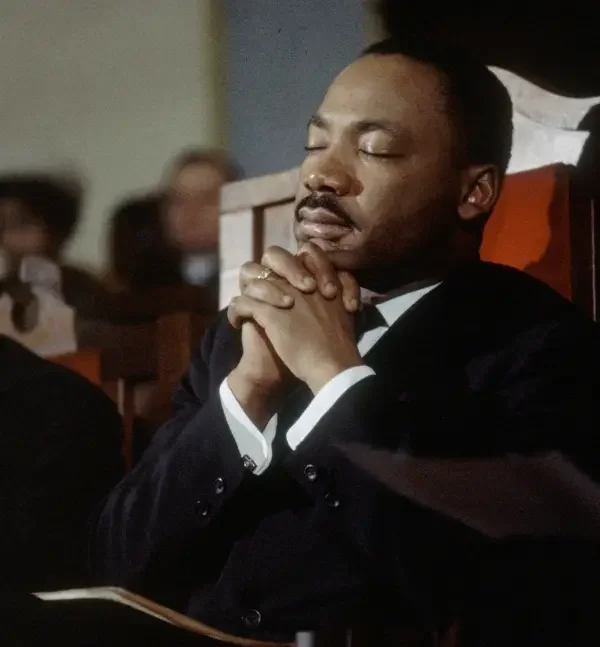
Dr. Martin Luther King Jr., in the final years of his life-quiet, contemplative, and carrying the full weight of what had been gained, and what had not.
In the final years of his life, Dr. Martin Luther King Jr. was carrying far more than the public often remembers. He was navigating constant travel, mounting political pressure, growing criticism, and very real danger. He faced ongoing death threats, lived under FBI surveillance, and endured the strain of being watched, targeted, and condemned while still being expected to lead. His opposition to the Vietnam War had cost him public support, and many who had once stood beside him had begun to distance themselves. This was not a triumphant period in his life, but a deeply heavy and contemplative one, and that weight sharpened his thinking about what had been achieved and what had not.
It was during this period, in a conversation with Harry Belafonte about integration, that King reportedly said, “I fear I am integrating my people into a burning house.” Whether recorded word for word or not, the reflection points to something real in his thinking at the time: a growing concern that legal victories had not transformed the underlying conditions Black people were living in. Segregation was being dismantled, but the systems underneath such as economic exploitation, inequality, moral indifference, among others-remained firmly in place. These were not new conditions created by integration; they were older structures that integration had failed to disrupt. What this reflection captures is not a public warning he issued from a podium, but a private reckoning with the limits of what civil rights victories alone could accomplish.
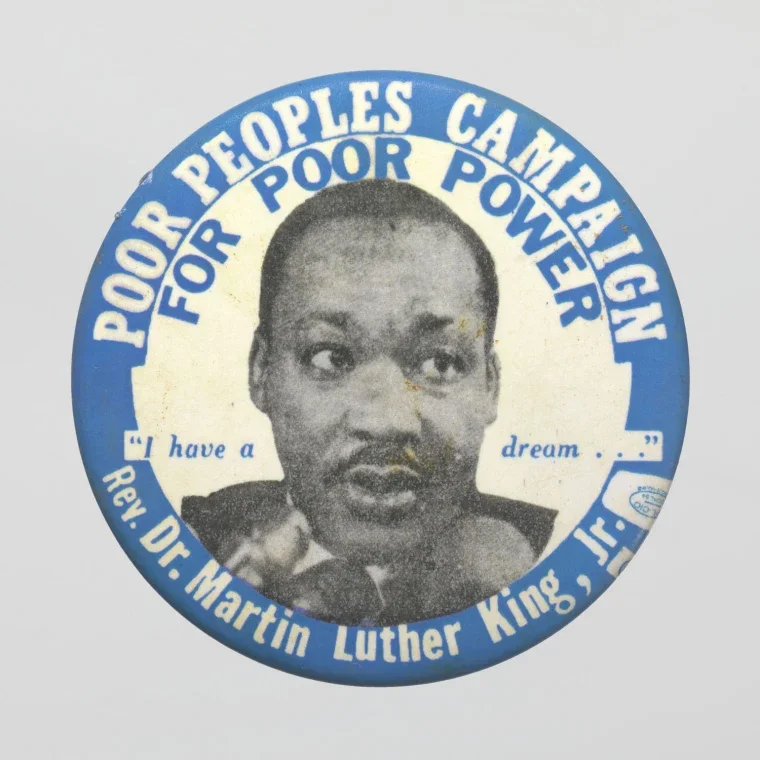
Image: Poor Peoples' Campaign pin depicts Dr Martin Luther King, Jr / AFL-CIO Locale 64 UnionAlex Jamison / Smithsonian National Museum of African American History and Culture
As his thinking evolved, Dr. King turned more directly toward economic justice through the Poor People’s Campaign, which he helped launch as a direct challenge to poverty and structural inequality. He began to argue more plainly that civil rights alone were not enough. Access to public spaces, voting rights, and legal protections mattered, but they did not automatically translate into economic stability, wealth, or security. Black people no longer had to ride at the back of the bus or drink from a “colored” water fountain, but the systems themselves remained largely unchanged. What was being offered during integration was legal access-the ability to enter institutions that had previously been closed, but access did not come with transformation. That is the contradiction we are still living in: people gained entry into schools, workplaces, and neighborhoods, but the conditions inside those spaces such as underfunding, wage inequality, housing instability, continued to reproduce the same disparities. Across this country, people were working, surviving, and still unable to build lasting security. The gap between access and actual stability continues to widen, raising the same question King was essentially asking: what does progress mean if it does not change people’s material conditions?
Integration opened doors, but it did not rebuild the systems those doors led into. In many cases, it meant entering institutions that were never designed to nurture Black life, only to absorb it into existing structures. Schools, labor markets, housing systems, and financial institutions continued to operate on foundations that excluded or disadvantaged Black communities long before integration. What was framed as opportunity often came at the cost of community control and cultural grounding, and access on its own was never a guarantee of equity. It simply placed people inside systems that were already functioning as they always had.
In his later speeches, particularly as he moved beyond a narrow focus on civil rights legislation, Dr. King spoke more directly about what he saw as a deeper crisis in America: not only political failure, but moral failure. He pointed to a nation capable of passing laws while still tolerating poverty, war, and inequality, and unwilling to fully reckon with the conditions those systems continued to produce. We still see that tension today in school systems that are technically integrated but remain deeply unequal in funding and outcomes, in a labor economy where full-time work does not guarantee stability, and in policies that promise fairness while maintaining disparities in housing, healthcare, and wealth. The language may change and the policies may evolve, but the underlying question remains the same: what does it mean to belong to a society that has not fully aligned its systems with its stated values?
This moment is not only about what we are up against, but also about how we are showing up. We are called to build with intention, not just visibility, and to stay grounded in purpose even as the work evolves. In recent years, there has been a shift in how this work is carried out, and too often that shift has come at the expense of depth, discipline, and accountability. Visibility has at times replaced depth, performance has at times replaced practice, and in that shift we have lost a steadier commitment to responsibility, clarity, and the kind of grounded work that can actually hold people. That loss is not limited to organizers or activists. It applies to anyone doing work that impacts people’s lives, whether in community spaces, institutions, or everyday leadership.
If we take seriously what Dr. King was wrestling with in those final years, then the question before us is not just whether we have access, representation, or influence. The question is whether we are building something different from what he feared, whether we are creating systems, communities, and ways of working that can actually sustain the people inside them. If the burning house remains the clearest image of his concern, then the task before us is not simply to gain entry. It is to decide whether we are willing to build something more honest, more durable, and more just.
